Sukhothai
I awoke before my alarm, and tried out the wireless Internet access. Sadly, it does not read the 5th floor, so I had to sneak down to the lobby under cover of darkness to check email. Racing through my morning shower I barely made it downstairs in time to depart for the day. Our first stop was for a noodle soup breakfast. A flavorful chicken leg nestled in next to some wide rice noodles in a dark broth. Each table had containers of dried chillies, chillies soaking in vinegar, and granulated sugar, which were helpful in making the soup more exciting.
The ruins in Sukhothai are primarily located in a large rectangle designated a UNESCO World Heritage site. We began at Wat Mahathat, the central temple of old Sukhothai. Although a lot of brick has been exposed over the years, the graceful design and spectacular scale of the structures remains evident. Kasma explained the basis for the unusual appearance of the Sukhothai-style Buddha images, which arguably have a more feminine form, based on historical descriptions of the Buddha and the artists’ imagination. Wat Mahathat features multiple postures, as well as numerous chedis and other structures.
We briefly visited Wat Si Sawai, which has a dark history: apparently virgin sacrifices were made, in a continuation of Hindu practices. Here, particularly, we were stalked by vendors hawking both locally made goods, such as beaded garments, and mass-produced ones, such as postcards. It was a bit annoying.
In a brief visit to Wat Traphang Ngoen, I took some pictures. I have no idea of their significance. At Wat Sa Si, there is an unusually feminine walking Buddha image. Finally, at Wat Si Chum, we saw a large Buddha image known as the “talking Buddha” because a general inappropriately used a cut in the wall beside the Buddha’s head to urge his troops to persevere.
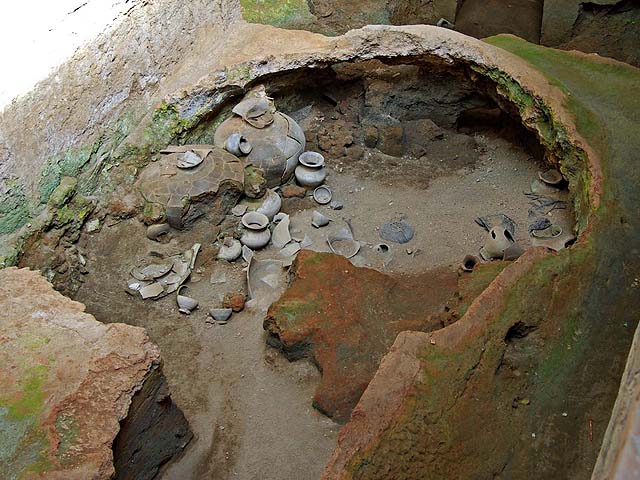
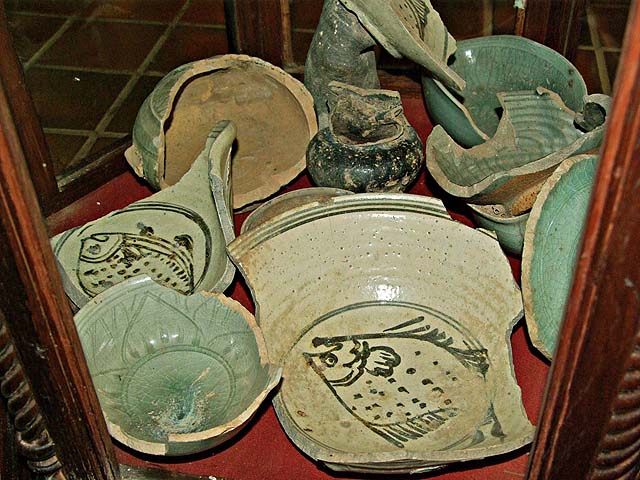
Suspecting we were “ruined out,” Kasma pointed our vans out of town to a museum preserving an archaeological site, the Sangalok Kilns. Here some of the earliest examples of Thai ceramics have been uncovered, including celadon that might predate the earliest discovered sites in China. In addition to the museum, there are shops up and down the road selling a variety of pottery from the practical to the ridiculous.
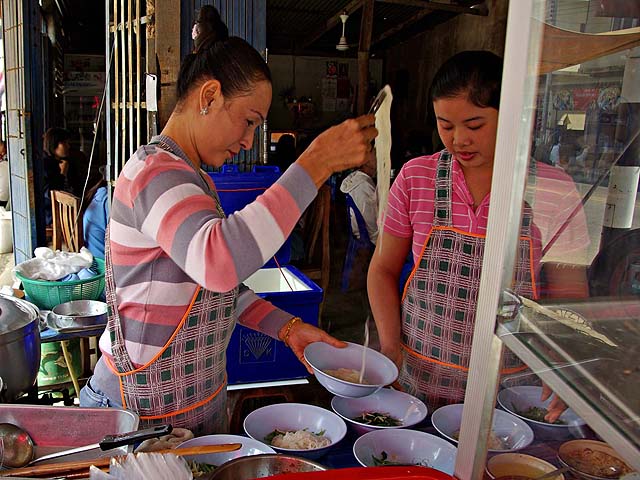
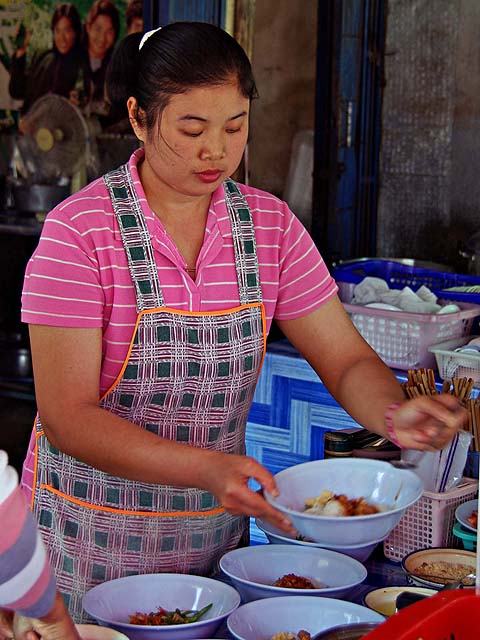
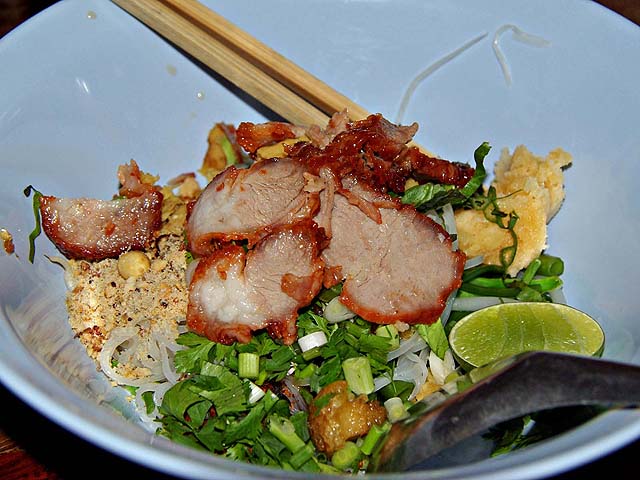
For lunch we drove around a few corners and stopped in at a noodle shop specializing in Sukhothai style noodles. A small portion of thin rice noodle are drained and dropped into a bowl, and topped with green onions, peanuts, thinly sliced roast pork, a crunchy chunk of pork rind, a generous lump of palm sugar, and a not-too-hot red sauce. The first step is to melt the palm sugar; you can start by squeezing a segment of lime direct on it and mixing and mashing with your soup spoon or chopsticks. Then you mix all the ingredients together and, if you like bit more heat or sourness or saltiness, seasoning to taste from the usual assortment of noodle shop jars, bowls, and bottles. Really, really good noodles, if a bit sweet.
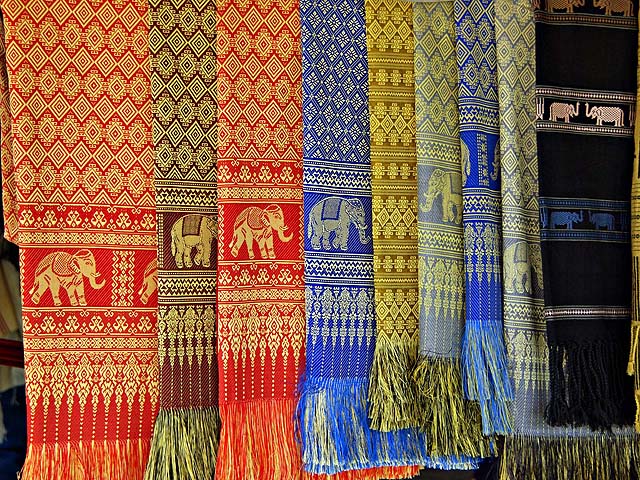
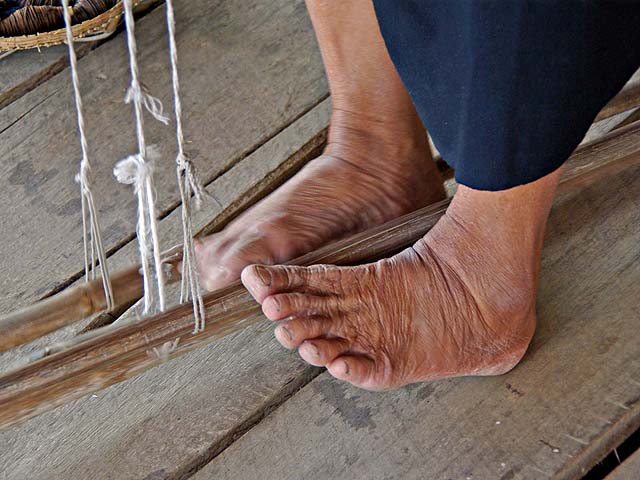
We visited the Sathorn Museum for a weaving demonstration, shopping, and viewing (in locked cases) some very fine examples of old gold-thread weaving.
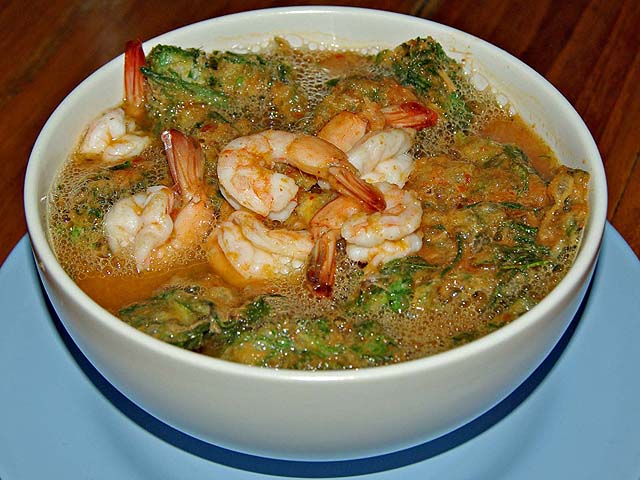
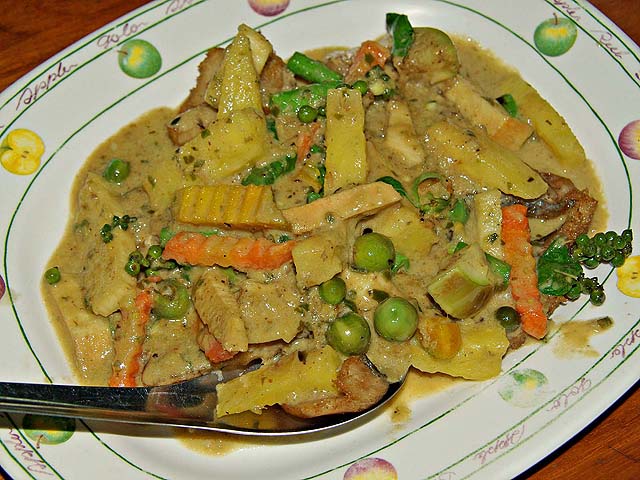
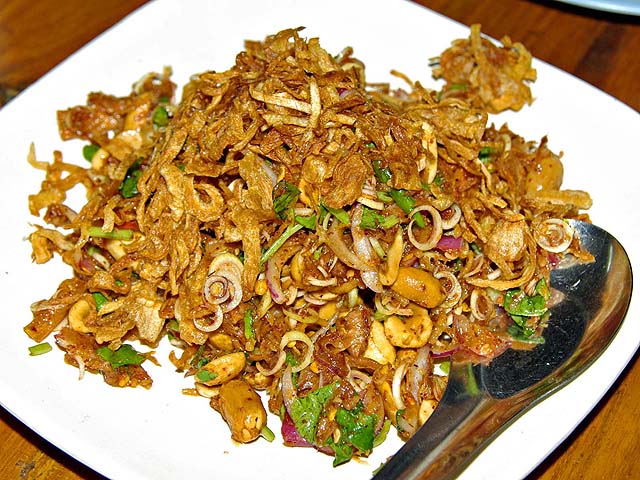
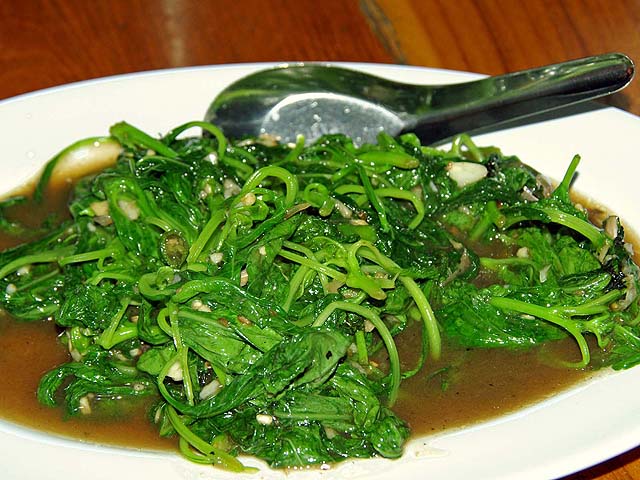
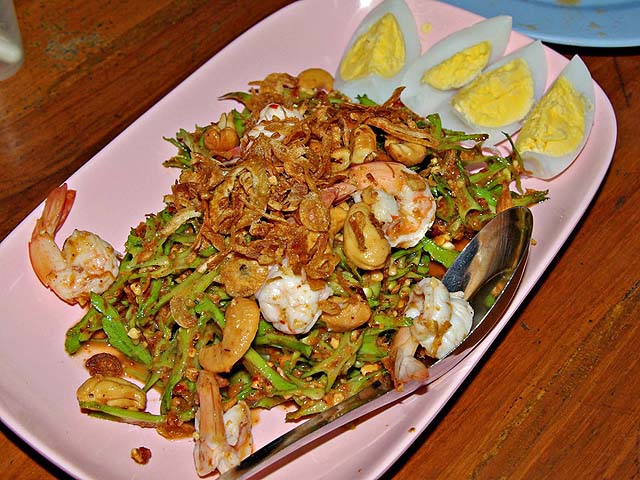
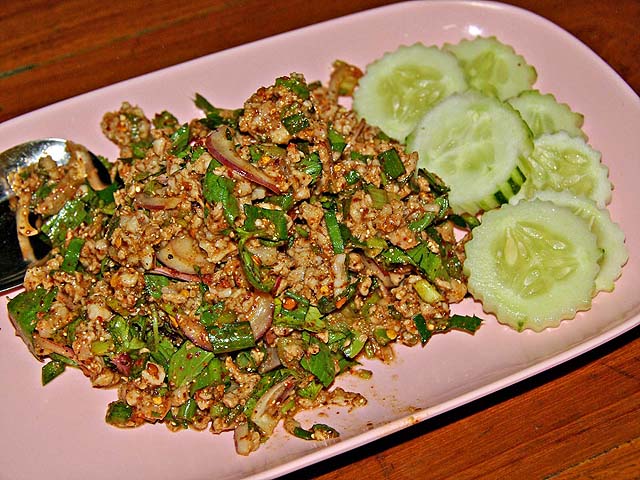
Dinner looks good from the photos, but now several months later I can’t recall the details.
Sorry, the comment form is closed at this time.